
Managing Cash Flow is Key to Business Success

Cash flow is the lifeblood of every small business but many business owners underestimate just how vital managing cash flow is to their business’s success. In fact, a healthy cash flow is more important than your business’s ability to deliver its goods and services.

While that might seem counterintuitive, consider this: if you fail to satisfy a customer and lose that customer’s business, you can always work harder to please the next customer. If you fail to have enough cash to pay your suppliers, creditors, or employees, you are out of business.Continue reading

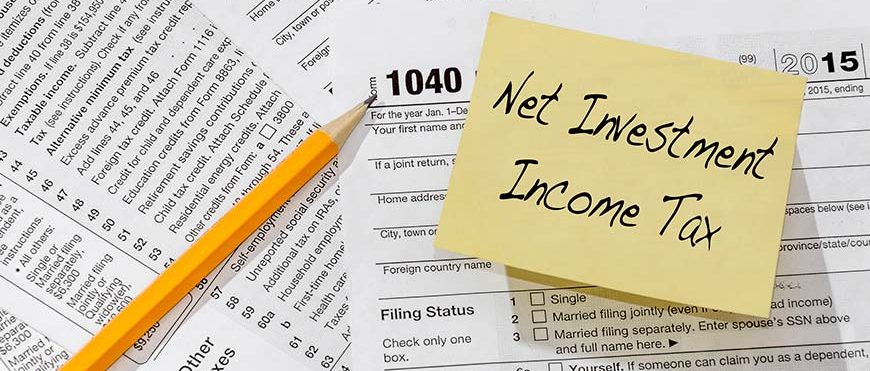
Understanding the Net Investment Income Tax

While the Net Investment Income Tax (NIIT) tends to affect wealthier individuals most often, in certain circumstances, it can also affect moderate-income taxpayers whose income increases significantly in a given tax year. Here’s what you need to know.

What is the Net Investment Income Tax?

The Net Investment Income Tax (NIIT) is a 3.8 percent tax on certain net investment income of individuals, estates, and trusts with income above statutory threshold amounts referred to as modified adjusted gross income or MAGI.

What is Included in Net Investment Income?

In general, investment income includes, but is not limited to interest, dividends, capital gains, rental and royalty income, non-qualified annuities, income from businesses involved in trading of financial instruments or commodities, and passive business activities such as rental income or income derived from royalties.Continue reading

Small Business Financing: Securing a Loan

At some point, most small businesses owners will visit a bank or other lending institution to borrow money. Understanding what your bank wants, and how to properly approach them, can mean the difference between getting your money for expansion and having to scrape through finding cash from other sources. Unfortunately, many business owners fall victim to several common, but potentially destructive myths regarding financing, such as:

  • Lenders are eager to provide money to small businesses.
  • Banks are willing sources of financing for start-up businesses.
  • When it comes to seeking money, the company speaks for itself.
  • A bank, is a bank, is a bank, and all banks are the same.
  • Banks, especially large ones, do not need and really do not want the business of a small firm.

Continue reading

Patriotic Day at Wheeler

June 27th was Patriotic Day for the Wheeler team in honor of the upcoming Independence Day holiday. The competition was fierce, with many of the staff going all out to show their Yankee pride! Congratulations to Marlena De Santiago, our winner this year who was dressed from head to toe in stars and stripes!

Employee Spotlight – Evan Benevento

Congratulations to Evan Benevento on officially becoming a Certified Public Accountant! Evan is the newest employee to join the Wheeler team as a staff accountant.   He is an alumni of CSU Monterey Bay, and completed his CPA exams in November of 2017. We are happy to have him on board, and all of us at Wheeler are proud to share in the excitement of his amazing accomplishment!

Small Business Payroll Expenses

Federal law requires most employers to withhold federal taxes from their employees’ wages. Whether you’re a small business owner who’s just starting out or one who has been in business a while and is ready to hire an employee or two, here are five things you should know about withholding, reporting, and paying employment taxes.

1. Federal Income Tax. Small businesses first need to figure out how much tax to withhold. Small business employers can better understand the process by starting with an employee’s Form W-4 and the withholding tables described in Publication 15, Employer’s Tax Guide. Please call if you need help understanding withholding tables.Continue reading

Tax Rules for Rental Income from Second Homes

Tax rules on rental income from second homes can be complicated, particularly if you rent the home out for several months of the year and also use the home yourself.

There is, however, one provision that is not complicated. Homeowners who rent out their property for 14 or fewer days a year can pocket the rental income, tax-free. In other words, if you live close to a vacation destination such as the beach or mountains, you may be able to make some extra cash by renting out your home (principal residence) when you go on vacation–as long as it’s two weeks or less. Although you can’t take depreciation or deduct for maintenance, you can deduct mortgage interest, property taxes, and casualty losses on Schedule A (1040), Itemized Deductions.Continue reading

The Home Office Deduction: What’s New

Self-employed taxpayers who use their home for business may be able to deduct expenses for the business use of it. Qualified persons can claim the deduction whether they rent or own their home and can use the simplified option or the regular method to claim a deduction.

For tax years prior to 2018, employees could also claim home office expenses as deductions provided they met additional rules such as business use must also be for the convenience of the employer (not just the employee). Tax reform legislation passed in 2017 however, repealed certain itemized deductions on Schedule A, Itemized Deductions for tax years 2018 through 2025, including employee business expense deductions related to home office use, affecting many remote employees.Continue reading

Five Tax Deductions that Disappeared in 2018

Under tax reform, taxpayers who itemize should be aware that deductions they may have previously counted on to reduce their taxable income have disappeared in 2018.

1. Moving Expenses

Prior to tax reform (i.e., for tax years starting before January 1, 2018), taxpayers could deduct expenses related to moving for a job as long as the move met certain IRS criteria. However, for tax years 2018 through 2025, moving expenses are no longer deductible–unless you are a member of the Armed Forces on active duty who moves because of a military order.Continue reading

Tax Benefits of S-Corporations

As a small business owner, figuring out which form of business structure to use when you started was one of the most important decisions you had to make; however, it’s always a good idea to periodically revisit that decision as your business grows. For example, as a sole proprietor, you must pay a self-employment tax rate of 15% in addition to your individual tax rate; however, if you were to revise your business structure to become a corporation and elect S-Corporation status you could take advantage of a lower tax rate.

What is an S-Corporation?

An S-Corporation (or S-Corp) is a regular corporation whose owners elect to pass corporate income, losses, deductions, and credits through to their shareholders for federal tax (and sometimes state) purposes. That is, an S-corporation is a corporation or a limited liability company that’s made a Subchapter S election (so named after a chapter of the tax code). Rather than a business entity per se, it is a type of tax classification. Shareholders then report the flow-through of income and losses on their personal tax returns and are assessed tax at their individual income tax rates, which allows S-corporations to avoid double taxation on corporate income. S-corporations are, however, responsible for tax on certain built-in gains and passive income at the entity level.Continue reading