Health Coverage Terms Employers Should Know

Under the Affordable Care Act, certain employers – known as applicable large employers – are subject to the employer shared responsibility provisions. You might be thinking about these topics as you make plans about 2021 health coverage for your employees.

If you are an employer that is subject to the employer shared responsibility provisions, you may choose either to offer affordable minimum essential coverage that provides minimum value to your full-time employees and their dependents or to potentially owe an employer shared responsibility payment to the IRS.

Here are definitions of key terms related to health coverage you might offer to employees:

Affordable coverage: If the lowest cost self-only health plan is 9.5 percent or less of your full-time employee’s household income, then the coverage is considered affordable. Because you likely will not know your employee’s household income, for purposes of the employer shared responsibility provisions, you can determine whether you offered affordable coverage under various safe harbors based on information available to you as the employer.

Minimum essential coverage: For purposes of reporting by applicable large employers, minimum essential coverage means coverage under an employer-sponsored plan. It does not include fixed indemnity coverage, life insurance, or dental or vision coverage.

Minimum value coverage: An employer-sponsored plan provides minimum value if it covers at least 60 percent of the total allowed cost of benefits that are expected to be incurred under the plan.

Please call if you have any questions or need more information about the employer shared responsibility provisions.

Additional Revisions to Loan Forgiveness and Loan Review Procedures

Per the Interim Final Rule – Additional Revisions to Loan Forgiveness and Loan Review Procedures, businesses with PPP Loans totaling $50,000 or less are not subject to the reductions related to FTE or salary reductions. An additional loan forgiveness application (3508S) should be used if loans are $50,000 or less, which is basically a self-certification.

If there are any questions, the PPP Team is available to assist. You can reach us at ppp@wheelercpa.com.

Tax Tips for Workers in the Gig Economy

The gig economy, also called sharing or access economy, is defined by activities where taxpayers earn income providing on-demand work, services, or goods. This type of work is often carried out via digital platforms such as an app or website. There are many types of sharing economy businesses including two of the most popular ones: ride-sharing, Uber and Lyft, for example, home rentals such as Airbnb, and TaskRabbit.

If taxpayers use one of the many online platforms to rent a spare bedroom, provide car rides or other goods or services, they may be part of the sharing or gig worker economy. If so, there are several things taxpayers should keep in mind.

Continue reading

Tax Considerations When Hiring Household Help

If you employ someone to work for you around your house, it is important to consider the tax implications of this type of arrangement. While many people disregard the need to pay taxes on household employees, they do so at the risk of paying stiff tax penalties down the road.


Continue reading

It’s Never Too Early to Check Tax Withholding

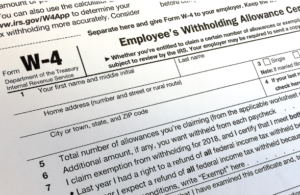
While it probably seems like tax season just ended, it is never too early to do a “Paycheck Checkup” to make sure the right amount of tax is withheld from earnings – and avoid a tax surprise next year when filing your 2020 tax return. As a reminder, because income taxes operate as a pay-as-you-go system, taxpayers are required by law to pay most of their tax as income is received.

Continue reading

What To Do If You Get a Letter From the IRS

The IRS mails millions of notices and letters to taxpayers every year for a variety of reasons. If you receive correspondence from the IRS don’t panic. You can usually deal with a notice by simply responding to it; most IRS notices are about federal tax returns or tax accounts. Each notice has specific instructions, so read your notice carefully because it will tell you what you need to do. In most cases, your notice will be about changes to your account, taxes you owe or a payment request; however, your notice may also ask you for more information about a specific issue.

Unless you are specifically instructed to do so, there is usually no need for a taxpayer to reply to a notice. For example, if your notice says that the IRS changed or corrected your tax return, review the information and compare it with your original return. If you agree with the notice, you usually don’t need to reply unless the notice gives you other instructions or you need to make a payment.

If you don’t agree with the notice, you will need to write a letter that explains why you disagree and include information and documents you want the IRS to consider. Mail your response with the contact stub at the bottom of the notice to the address on the contact stub. Allow at least 30 days for a response.

For most notices, there is no need to call or visit the IRS. If you have questions, call the phone number in the upper right-hand corner of the notice. Be sure to have a copy of your tax return and the notice with you when you call. As always, keep copies of any notices you receive with your tax records.

Be alert for tax scams as well. As a reminder, the IRS sends letters and notices by mail and does NOT contact people by email or social media to ask for personal or financial information.

If you need assistance understanding an IRS Notice or letter, believe it is in error, or discover you owe additional tax, please call the office.

San Jose: (408) 252-1800

Watsonville: (831) 726-8500

The Home Office Deduction

With more people working from home than ever before, taxpayers may be wondering if they can claim a home office deduction when they file their 2020 tax return next year. The short answer is that self-employed taxpayers who use their home for business may be able to deduct expenses for the business use of it whether they rent or own their home. If you are an employee, however, you are not eligible to take the home office deduction – even if you are working remotely in your home office.

Here is what taxpayers should keep in mind when it comes to understanding the home office deduction and whether they can claim it:

1. Regular and Exclusive Use. Generally, taxpayers must use a part of their home regularly and exclusively for business purposes. The part of a home used for business must also be:

  • A principal place of business, or
  • A place where taxpayers meet clients or customers in the normal course of business, or
  • A separate structure not attached to the home. Examples could include a garage, barn, greenhouse, or studio.

For example, a taxpayer who uses an extra room to run their business can take a home office deduction only for that extra room so long as it is used both regularly and exclusively in the business.

The term “home” for purposes of this deduction is defined as a house, apartment, condominium, mobile home, boat or similar property. It does not include any part of the taxpayer’s property used exclusively as a hotel, motel, inn or similar business.

A taxpayer can also meet this requirement if administrative or management activities are conducted at the home and there is no other location to perform these duties. Therefore, someone who conducts business outside of their home but also uses their home to conduct business may still qualify for a home office deduction.

2. Expenses that can be deducted. Taxpayers can deduct certain expenses such as mortgage interest, insurance, utilities, repairs, maintenance, depreciation and rent. They must meet specific requirements to claim home expenses as a deduction, and the deductible amount of these types of expenses may be limited.

3. Simplified Option. To use the simplified option, multiply the allowable square footage of the office by a rate of $5. The maximum footage allowed is 300 square feet. As such, the maximum deduction under this method is $1,500. This option saves time because it simplifies how to figure and claim the deduction and makes it easier to keep records. The rules for claiming a home office deduction remain the same.

4. Regular Method. This method includes certain costs paid for a home. For example, part of the rent for rented homes may qualify. Deductions for a home office are based on the percentage of the home devoted to business use. Taxpayers who use a whole room or part of a room for conducting their business need to figure out the percentage of the home used for business activities to deduct indirect expenses. Direct expenses are deducted in full.

5. Deduction Limit. If the gross income from the business use of a home is less than expenses, the deduction for some expenses may be limited.

Taxpayers who are self-employed and choose the regular method should use Form 8829, Expenses for Business Use of Your Home, to figure the amount to deduct. Claim the deduction using either method on Schedule C, Profit or Loss from Business.

Please call if you would like more information about the home office deduction and how it applies to your tax situation.

San Jose: (408) 252-1800

Watsonville: (831) 726-8500

E-Signatures Temporarily Allowed for Certain Forms

The use of digital signatures on certain forms that cannot be filed electronically will now be temporarily allowed. Expanding the use of digital signatures will help to protect the health of taxpayers and tax professionals during the coronavirus pandemic by reducing in-person contact between taxpayers and tax professionals.

Form 1040, U.S. Individual Income Tax Return, already uses an electronic signature when it is filed electronically, either by using a taxpayer self-selected PIN, if self-prepared or a tax-preparer selected PIN, if using a tax professional. While more than 90 percent of Form 1040s are filed electronically, if you haven’t filed your 2019 tax return this year, it is important to consider e-filing forms whenever possible, due to COVID-19.

The following forms can be submitted with digital signatures if mailed by or on December 31, 2020:

  • Form 706, U.S. Estate (and Generation-Skipping Transfer) Tax Return;
  • Form 706-NA, U.S. Estate (and Generation-Skipping Transfer) Tax Return;
  • Form 709, U.S. Gift (and Generation-Skipping Transfer) Tax Return;
  • Form 3115, Application for Change in Accounting Method;
  • Form 3520, Annual Return To Report Transactions With Foreign Trusts and Receipt of Certain Foreign Gifts;
  • Form 3520-A, Annual Information Return of Foreign Trust With a U.S. Owner;
  • Form 8832, Entity Classification Election;
  • Form 8802, Application for U.S. Residency Certification;
  • Form 1066, U.S. Income Tax Return for Real Estate Mortgage Investment Conduit;
  • Form 1120-RIC, U.S. Income Tax Return For Regulated Investment Companies;
  • Form 1120-C, U.S. Income Tax Return for Cooperative Associations;
  • Form 1120-REIT, U.S. Income Tax Return for Real Estate Investment Trusts;
  • Form 1120-ND, Return for Nuclear Decommissioning Funds and Certain Related Persons;
  • Form 1120-L, U.S. Life Insurance Company Income Tax Return;
  • Form 1120-PC, U.S. Property and Casualty Insurance Company Income Tax Return; and
  • Form 8453 series, Form 8878 series, and Form 8879 series regarding IRS e-file Signature Authorization Forms.

This temporary option for e-signatures is subject to change at any time. Please contact the office with questions about this or any tax-related information:

San Jose: (408) 252-1800

Watsonville: (831) 726-8500

The 2020 JL Challenge

On August 29th and 30th, Team Wheeler – consisting of Steve Stringari, Tim McLaughlin, Kenny Tims and our very own Dennis Campbell – attended the 11th annual JL Challenge held at Spring Hills Golf Course. The challenge is an annual fundraising event for the Jerry Loyola Foundation whose mission is to provide quality of life support for families battling cancer, and to promote junior golf within the community. The foundation serves to honor Jerry Loyola, a talented young golfer who lost his battle with cancer in 2009 at the age of 24. Wheeler Accountants has made participation in the challenge a tradition since 2017 and is recognized as a major sponsor.

Despite the challenges faced this year, the Jerry Loyola foundation was able to hold a scaled back event while observing proper social distancing. Team Wheeler scored a 5 under par net score of 66 and tied for 14th place overall. We are happy to support a great cause and look forward to another challenge next year!

PPP IFR 8/24: Treatment of Owners and Certain Nonpayroll Costs

The Small Business Administration released a new interim final rule this week, effective 8/24, to address the Treatment of Owners and Forgiveness of Certain Nonpayroll Costs.

Items to note:

Amounts attributable to the business operation of a tenant or subtenant may not be considered for eligible nonpayroll costs. The document provides some examples for shared leases and mortgages (including home-based businesses).

Rent to related parties may be eligible nonpayroll costs so long as the amount of the loan forgiveness requested for rent or lease payments to a related party is no more than the amount of mortgage interest owed on the property during the covered period that is attributable to the space being rented by the business. Keep in mind that the lease/mortgage must have been entered into prior to February 15, 2020.

Finally, there appears to be clarification regarding owner-employees with less than 5% ownership in C or S corps: they are not subject to the owner-employee compensation rule. The exemption is intended to cover owner-employees who have no meaningful ability to influence decisions over how loan proceeds are allocated.

We will continue to be on the lookout for these items as we prepare forgiveness applications.