Include Gig Economy Income on Tax Returns

The gig economy is also referred to as the on-demand, sharing, or access economy. People involved in the gig economy earn income as a freelancer, independent worker or employee. Typically, an online platform is used to connect people with potential or actual customers to provide goods or services. Examples include renting out a home or spare bedroom and providing meal delivery services or rides.

During the pandemic, many people joined the ranks of the gig economy to help make ends meet. Whether you are part of the gig economy because it’s a primary source of income or want to make extra money with a side business, all taxpayers need to understand that they must report gig economy income on their tax return.

Here’s what you should know about the gig economy and your taxes:

1. Money earned through this work is usually taxable.

2. There are tax implications for both the company providing the platform and the individual performing the services.

3. This income is usually taxable even if:

  • The taxpayer providing the service doesn’t receive an information return, like a Form 1099-NEC, Form 1099-MISC, Form 1099-K, or Form W-2.
  • The activity is only part-time or side work.
  • The taxpayer is paid in cash.

4. People working in the gig economy are generally required to pay:

  • Income taxes.
  • Federal Insurance Contribution Act or Self-employment Contribution Act tax.
  • Additional Medicare taxes.

5. Independent contractors may be able to deduct business expenses. These taxpayers should double-check the rules around deducting expenses related to the use of things like their car or house. They should remember to keep records of their business expenses.

6. Special rules usually apply to rental property also used as a residence during the tax year. Taxpayers should remember that rental income is generally fully taxable.

7. Workers who do not have taxes withheld from their pay have two ways to pay their taxes in advance. Here are these two options:

  • Gig economy workers who have another job where their employer withholds taxes from their paycheck can fill out and submit a new Form W-4. The employee does this to request that the other employer withholds additional taxes from their paycheck. This additional withholding can help cover the taxes owed from their gig economy work.
  • The gig economy worker can make quarterly estimated tax payments. They do this to pay their taxes and any self-employment taxes owed throughout the year.

For more information on the gig economy, please call the office:

San Jose: (408) 252-1800

Watsonville: (831) 726-8500

Self-Employed Can Claim Sick & Family Leave Tax Credit

A new form is available for self-employed individuals to claim sick and family leave tax credits under the Families First Coronavirus Response Act (FFCRA). The FFCRA, passed in March 2020, allows eligible self-employed individuals who, due to COVID-19, are unable to work or telework for reasons relating to their own health or to care for a family member to claim refundable tax credits to offset their federal income tax.

Self-employed individuals who are eligible for the credits determine their qualified sick and family leave equivalent tax credits by using a new IRS form, Form 7202, Credits for Sick Leave and Family Leave for Certain Self-Employed Individuals. The tax credits are equal to either their qualified sick leave or family leave equivalent amount, depending on circumstances.

For leave taken between April 1, 2020, and December 31, 2020, taxpayers can claim the credit on 2020 tax returns (on Form 1040). They can also claim the credit next year when filing their 2021 tax return (Form 1040) for leave taken between January 1, 2021, and March 31, 2021.

Filing Form 7202

Eligible self-employed individuals are those who:

  • Conduct a trade or business that qualifies as self-employment income, and
  • Are eligible to receive qualified sick or family leave wages under the Emergency Paid Sick Leave Act or Emergency Family and Medical Leave Expansion Act as if the taxpayer was an employee.

As always, taxpayers must maintain appropriate documentation establishing their eligibility for the credits as an eligible self-employed individual. Please don’t hesitate to call if you need assistance calculating the credit, determining if you are eligible, or have any other tax questions.

San Jose: (408) 252-1800

Watsonville: (831) 726-8500

Wheeler News – Welcome Lucas Joseph Satterfield

This month we are excited to announce the birth of tax manager Nick Satterfield’s newest family member!

Lucas Joseph Satterfield was born to parents Nick & Shelby in the early morning on Wednesday, April 7th. Happy and healthy, Lucas arrived at a height of 20.5 inches and weighing seven pounds, fourteen ounces.

Congratulations to Nick and his family!

Extension of PPP Loan Program Signed into Law

On, Tuesday, March 30, President Biden signed into law a two-month extension of the Paycheck Protection Program one day before the program was set to expire. The extension gives small businesses and nonprofits until May 31, 2021 to apply for a forgivable loan. We encourage businesses and nonprofits that qualify to apply soon as the program is subject to available funds. 

Senate Passes PPP Deadline Extension

On March, 25, 2021, the U. S. Senate passed a bill to extend the Paycheck Protection Program (PPP) application deadline from March 31 to May 31. The 60 day extension will help small businesses and nonprofits complete the application process or file new applications. As of March 24, 2021, more than 190,000 applications were still held up in the SBA’s PPP platform due to unresolved error codes in the validation checks that were instituted by the SBA  to help prevent fraudulent applications from being funded. As of March 21, 2021, there was approximately $94 billion dollars remaining for the PPP loan program. 

We urge businesses that have not already applied for a PPP loan or a round 2 PPP loan to apply soon. Small businesses and nonprofits can qualify for a second PPP loan if they experience a 25% reduction in gross receipts in any quarter of 2020 relative to the same quarter in 2019. 

Please contact your preparer or the PPP team directly at ppp@wheelercpa.com if you have any questions regarding a PPP loan. 

IRS Extends 2020 Individual Tax Deadline

On March 17th, we received the news that the IRS has pushed back the tax filing and payment deadline for Individuals to May 17th. While we welcome the additional time during this challenging tax season, this change comes with some important caveats. We currently know the following:

  • The filing date for Individual tax returns (Form 1040) has been pushed back to May 17, 2021
  • The payment due date for 2020 tax year balances due only has been pushed back to May 17, 2021
  • Q1 Estimated tax payments for the 2021 tax year are still due April 15, 2021
  • Corporations, trusts, and presumably other filings such as gift tax returns are still due April 15, 2021 unless an extension is requested. Payments for the 2020 tax year are also still due April 15, 2021
  • IRA and HSA Contributions are due May 17, 2021 (Confirmed by the IRS on March 24, 2021)
  • The state of California has conformed to the federal changes for the filing date and payment date for the 2020 tax year for Individuals – The state also retains the original due dates for Corporations, trusts, Q1 2021 payments and so on – the same as federal.

The IRS is approximately 25-30% behind this year in terms of number of returns processed. We strongly encourage you to continue to send in your tax documentation as soon as possible and no later than April 1, 2021 to give your Wheeler Accountants preparer time to complete your tax filing.

If you expect you will need an extension of time to file beyond the May 17th due date, please let us know right away. Your tax preparer may also recommend an extension if your specific circumstances warrant it; for example, if you are impacted by any of the new tax laws that we are awaiting further guidance on from the IRS or Franchise Tax Board, or we feel you may benefit from waiting to file in some other capacity.

Renting Out a Second Home

In general, income from renting a vacation home for 15 days or longer must be reported on your tax return on Schedule E, Supplemental Income and Loss. You should also keep in mind that the definition of a “vacation home” is not limited to a house. Apartments, condominiums, mobile homes, and boats are also considered vacation homes in the eyes of the IRS. Tax rules on rental income from second homes can be confusing, especially if you rent the home out for several months of the year and use the home yourself.

Continue reading

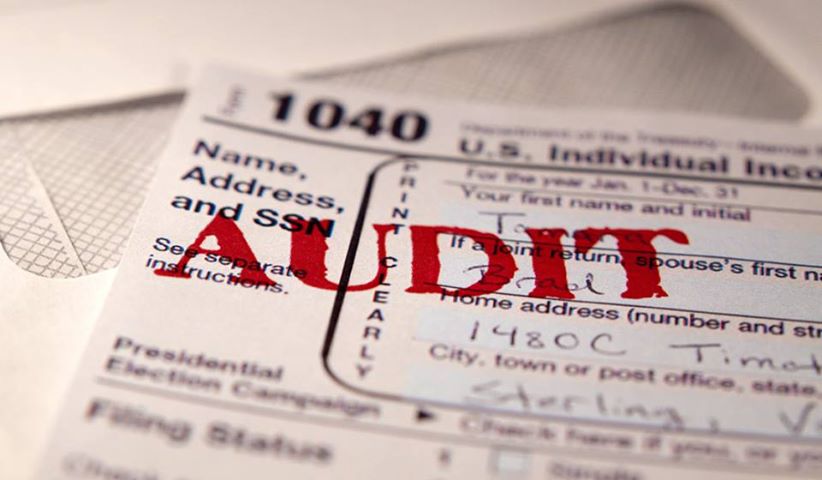
Avoiding an IRS Tax Audit

Just 0.45 percent of taxpayers were audited in fiscal year 2019. Still, with taxes becoming more complicated every year, there is an even greater possibility of confusion turning into a tax mistake and an IRS audit. Avoiding “red flags” like the ones listed below could help.

Continue reading

There’s Still Time To Make an IRA Contribution for 2020

If you haven’t contributed funds to an Individual Retirement Account (IRA) for tax year 2020, or if you’ve put in less than the maximum allowed, you still have time to do so. You can contribute to either a traditional or Roth IRA until the May 17, 2021, due date, not including extensions.

Continue reading

Unemployment Benefits Identity Theft Scam Alert

During 2020, millions of taxpayers were impacted by the COVID-19 pandemic through job loss or reduced work hours. Some taxpayers who faced unemployment or reduced work hours applied for and received unemployment compensation from their state. As a reminder, unemployment benefits are taxable income and must be reported on tax returns.

Continue reading