

Settling Tax Debt With an IRS Offer in Compromise

An offer in compromise (OIC) is an agreement between a taxpayer and the Internal Revenue Service that settles a taxpayer’s tax liabilities for less than the full amount owed. That’s the good news. The bad news is that not everyone can use this option to settle tax debt; the IRS rejected nearly 60 percent of taxpayer-requested offers in compromise. If you owe money to the IRS and wonder if an IRS offer in compromise is the answer, here’s what you need to know.

Who is Eligible?

If you can’t pay your full tax liability or doing so creates a financial hardship, an offer in compromise may be a legitimate option. However, it is not for everyone, and taxpayers should explore all other payment options before submitting an offer in compromise to the IRS. Taxpayers who can fully pay the liabilities through an installment agreement or other means generally won’t qualify for an OIC.

To qualify for an OIC, the taxpayer must have:

  • Filed all tax returns.
  • Made all required estimated tax payments for the current year.
  • Made all required federal tax deposits for the current quarter if the taxpayer is a business owner with employees.

IRS Acceptance Criteria

Whether your offer in compromise is accepted depends on several factors; however, typically, an offer in compromise is accepted when the amount offered represents the most the IRS can expect to collect within a reasonable time frame – referred to as the reasonable collection potential (RCP). In most cases, the IRS won’t accept an OIC unless the amount offered by a taxpayer is equal to or greater than the reasonable collection potential (RCP), which is how the IRS measures the taxpayer’s ability to pay.

The RCP is defined as the value that can be realized from the taxpayer’s assets, such as real property, automobiles, bank accounts, and other property. In addition to property, the RCP also includes anticipated future income minus certain amounts allowed for basic living expenses.

The IRS may accept an OIC based on one of the following criteria:

Doubt as to liability. An OIC meets this criterion only when there’s a genuine dispute about the existence or amount of the correct tax debt under the law.

Doubt as to collectibility. This refers to whether there is doubt that the amount owed is fully collectible such as when the taxpayer’s assets and income are less than the full amount of the tax liability.

Effective tax administration. This applies to cases where there is no doubt that the tax is legally owed and that the full amount owed can be collected, but requiring payment in full would either create an economic hardship – or would be unfair and inequitable because of exceptional circumstances.

Application and Fees

When requesting an OIC from the IRS, use Form 656, Offer in Compromise, and also submit Form 433-A (OIC), Collection Information Statement for Wage Earners and Self-Employed Individuals. If you are applying as a business, use Form 433-B (OIC), Collection Information Statement for Businesses. A taxpayer submitting an OIC based on doubt as to liability must file additional forms as well.

A nonrefundable application fee, as well as initial payment (also nonrefundable), is due when submitting an OIC. If the OIC is based on doubt as to liability, no application fee is required, however.

If the taxpayer is an individual (not a corporation, partnership, or other entity) who meets Low-Income Certification guidelines, they do not have to submit an application fee or initial payment. They will not need to make monthly installments during the evaluation of an offer in compromise.

The initial payment is based on which payment option you choose for your offer in compromise:

  • Lump Sum Cash. Submit an initial payment of 20 percent of the total offer amount with your application. If your offer is accepted, you will receive written confirmation. Any remaining balance due on the offer is paid in five or fewer payments.
  • Periodic Payment. Submit your initial payment with your application. Continue to pay the remaining balance in monthly installments while the IRS considers your offer. If accepted, continue to pay monthly until it is paid in full.

If the IRS rejects your OIC, you will be notified by mail. The letter will explain why the IRS rejected the offer and provide detailed instructions on appealing the decision. An appeal must be made within 30 days from the date of the letter.

Questions?

If you have any questions about the IRS Offer in Compromise program, don’t hesitate to contact the office for more information.

San Jose: (408) 252-1800

Watsonville: (831) 726-8500
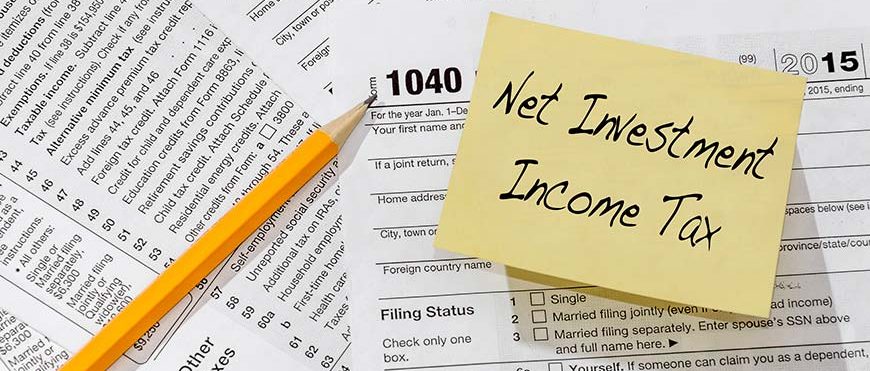
What Is the Net Investment Income Tax?

While the Net Investment Income Tax (NIIT) tends to affect wealthier individuals most often, in certain circumstances, it can also affect moderate-income taxpayers whose income increases significantly in a given tax year. Here’s what you need to know.

What is the Net Investment Income Tax?

The Net Investment Income Tax (NIIT) is a 3.8 percent tax on certain net investment income of individuals, estates, and trusts with income above statutory threshold amounts referred to as modified adjusted gross income or MAGI.

What is Included in Net Investment Income?

In general, investment income includes, but is not limited to interest, dividends, capital gains, rental and royalty income, non-qualified annuities, income from businesses involved in trading of financial instruments or commodities, and passive business activities such as rental income or income derived from royalties.

What is Not Included in Net Investment Income?

The following types of income are not included:

  • Wages
  • Unemployment compensation
  • Operating income from a non-passive business
  • Social Security Benefits
  • Alimony
  • Tax-exempt interest
  • Self-employment income
  • Alaska
  • Distributions from certain Qualified Plans

Individuals

Individuals with MAGI of $250,000 (married filing jointly) or $200,000 for single filers are taxed at a flat rate of 3.8 percent on investment income such as dividends, taxable interest, rents, royalties, certain income from trading commodities, taxable income from investment annuities, REITs and master limited partnerships, and long and short-term capital gains. The NIIT is a flat rate tax paid in addition to other taxes owed and threshold amounts are not indexed for inflation.

Non-resident aliens are not subject to the NIIT; however, if a non-resident alien is married to a US citizen and is planning to file as a resident alien as married filing jointly, there are special rules. Please call if you have any questions about this.

Investment income is generally not subject to withholding, so NIIT is going to affect your tax liability for the 2021 tax year. In addition, even lower-income taxpayers not meeting the threshold amounts may be subject to NIIT if they receive a windfall such as a one-time sale of assets that bumps their MAGI up high enough to be subject to the NIIT.

Strategies to Minimize NIIT

Tax planning is crucial. For example, if you are anticipating a windfall (this tax year or next), there are several strategies that you could use to minimize your MAGI and reduce or possibly eliminate tax liability when you file your tax return. These include but are not limited to:

  • Rental Real Estate (depreciation deductions)
  • Installment sales (including figuring out the best timing for sale)
  • Roth conversions
  • Charitable donations
  • Tax-deferred annuities
  • Municipal bonds

Sale of a Home

The Net Investment Income Tax does not apply to any amount of gain that is excluded from gross income for regular income tax purposes ($250,000 for single filers and $500,000 for a married couple) on the sale of a principal residence from gross income for regular income tax purposes. In other words, only the taxable part of any gain on the sale of a home has the potential to be subject to NIIT, providing the taxpayer is over the MAGI threshold amount.

Estates and Trusts Affected

Estates and Trusts are subject to NIIT if they have undistributed net investment income and also have adjusted gross income over the dollar amount at which the highest tax bracket for an estate or trust begins for such taxable year. In 2021, this threshold amount is $13,050.

Special rules apply for certain unique types of trusts such a Charitable Remainder Trusts and Electing Small Business Trusts. Some trusts, including “Grantor Trusts” and Real Estate Investment Trusts (REIT), are not subject to the NIIT.

Non-qualified dividends generated by investments in a REIT and taxed at ordinary tax rates may be subject to the Net Investment Income Tax.

Reporting and Paying the Net Investment Income Tax

Individual taxpayers should report (and pay) the tax on Form 1040. Estates and Trusts report (and pay) the tax on Form 1041. Please call if you need assistance or have any questions abut reporting and paying the NIIT.

For tax years 2018 and beyond, individuals, estates, and trusts that expect to pay estimated taxes should adjust their income tax withholding or estimated payments to account for the tax increase and avoid underpayment penalties. The NIIT is not withheld from an employed individual’s wages; however, it is possible to request that additional income tax be withheld.

Wondering how the Net Investment Income Tax could affect your tax situation? Give the office a call today and find out.

San Jose: (408) 252-1800

Watsonville: (831) 726-8500

Small Business: Understanding Payroll Expenses

Federal law requires most employers to withhold federal taxes from their employees’ wages. Whether you’re a small business owner who is just starting or one who has been in business for a while – ready to hire an employee or two – here is what you should know about withholding, reporting, and paying employment taxes.

Federal Income Tax

Small businesses first need to figure out how much tax to withhold. Small business employers can better understand the process by starting with an employee’s Form W-4 and the withholding tables described in Publication 15, Employer’s Tax Guide. Please call if you need additional help understanding withholding tables.

Social Security and Medicare Taxes

Most employers also withhold social security and Medicare taxes from employees’ wages and deposit them along with the employers’ matching share. In 2013, employers became responsible for withholding the Additional Medicare Tax on wages that exceed a threshold amount. There is no employer match for the Additional Medicare Tax, and certain types of wages and compensation are not subject to withholding.

Federal Unemployment (FUTA) Tax

Employers report and pay FUTA tax separately from other taxes. Employees do not pay this tax or have it withheld from their pay. Businesses pay FUTA taxes from their own funds.

Depositing Employment Taxes.

Generally, employers pay employment taxes by making federal tax deposits through the Electronic Federal Tax Payment System (EFTPS). The amount of taxes withheld during a prior one-year period determines when to make the deposits. Publication 3151-A, The ABCs of FTDs: Resource Guide for Understanding Federal Tax Deposits and the IRS Tax Calendar for Businesses and Self-Employed are helpful tools.

Failure to make a timely deposit can mean being subject to a failure-to-deposit penalty of up to 15 percent. But the penalty can be waived if an employer has a history of filing required returns and making tax payments on time. Penalty relief is available, however. For more information, please call the office.

Reporting Employment Taxes

Generally, employers report wages and compensation paid to an employee by filing the required forms with the IRS. E-filing Forms 940, 941, 943, 944, and 945 is an easy, secure, and accurate way to file employment tax forms. Employers filing quarterly tax returns with an estimated total of $1,000 or less for the calendar year may now request to file Form 944, Employer’s ANNUAL Federal Tax Return once a year instead. At the end of the year, the employer must provide employees with Form W-2, Wage and Tax Statement, to report wages, tips, and other compensation. Small businesses file Forms W-2 and Form W-3, Transmittal of Wage and Tax Statements, with the Social Security Administration and, if required, state or local tax departments.

Save Time – File Payroll Taxes Electronically

Running a business with employees can be hard work. Business owners can make things a little easier on themselves by filing payroll and employment taxes electronically. Not only does it save time, but it is also secure and accurate, and the filer receives an email to confirm the IRS received the form within 24 hours.

While the easiest way to file payroll and employment taxes is to have your tax professional file the forms for you, some employers prefer to do it themselves. Employers submitting the forms themselves will need to purchase IRS-approved software. There may be a fee to file electronically. The software will require a signature in one of two ways. The first way is by scanning and attaching Form 8453-EMP, Employment Tax Declaration for an IRS e-file Return. The second is to apply for an online signature PIN. Taxpayers should allow at least 45 days to receive their PIN. The software will prompt the user on the steps needed to request the PIN..

Some of the forms employers can e-file include:

  • Form 940, Employer’s Annual Federal Unemployment Tax Return – Employers use this form to report annual Federal Unemployment Tax Act tax.
  • Form 941, Employer’s Quarterly Federal Tax Return – Employers use this form to report income taxes, social security tax or Medicare tax withheld from employees’ paychecks. They also use it to pay their portion of Social Security or Medicare tax.
  • Form 943, Employer’s Annual Federal Tax Return for Agricultural Employees – Employers file this form if they paid wages to one or more farmworkers and the wages were subject to social security and Medicare taxes or federal income tax withholding.
  • Form 944, Employer’s Annual Federal Tax Return – Small employers use this form. These are employers whose annual liability for social security, Medicare, and withheld federal income taxes is $1,000 or less. These employers use this form to file and pay these taxes only once a year instead of every quarter.
  • Form 945, Annual Return of Withheld Federal Income Tax – Employers use this form to report federal income tax withheld from nonpayroll payments.

Questions about payroll taxes?

If you have any questions about payroll taxes don’t hesitate to contact the office:

San Jose: (408) 252-1800

Watsonville: (831) 726-8500

Six Steps to Protect Against Taxpayer ID Theft

Tax-related identity theft occurs when someone uses a taxpayer’s stolen personal information, such as a Social Security number, to file a tax return claiming a false refund. Thieves are actively working to steal taxpayer information and identities, and everyone should do everything they can to prevent identity theft.

Here are six ways to help taxpayers protect themselves against identity theft:

1. Always use security software. This software should have firewall and anti-virus protections.

2. Use strong, unique passwords. They should also consider using a password manager.

3. Learn to recognize and avoid phishing emails, threatening calls, and texts from thieves. These scammers pose as legitimate organizations such as banks, credit card companies, and even the IRS.

4. Don’t click on links in unsolicited emails or messages from unknown senders. People shouldn’t click on links or download attachments from emails that seem suspicious, even if they appear to be from senders they know.

5. Protect personal information and that of any dependents. For example, people shouldn’t routinely carry around their Social Security cards. They should also make sure tax records are secure.

6. Get an Identity Protection PIN. The Identity Protection PIN is a six-digit code known only to the taxpayer and the IRS that helps prevent identity thieves from filing fraudulent tax returns using a taxpayer’s personally identifiable information.

Please call the office if you have any concerns about taxpayer ID theft.

San Jose: (408) 252-1800

Watsonville: (831) 726-8500

What to Know About Backup Withholding

Backup withholding is a federal tax on income that otherwise typically doesn’t require tax withholding, such as 1099 and W2-G income. Taxpayers who receive this type of income may have backup withholding deducted from their payments. Here is what you should know about backup withholding:

1. Backup withholding is required on certain nonpayroll amounts when certain conditions apply.

The payer (employer) making such payments to the payee (individual taxpayer) doesn’t generally withhold taxes from certain payments. As such, the payees report and pay taxes on this income when they file their federal tax returns. There are, however, certain situations when the payer is required to withhold a percentage of tax to make sure the IRS receives the tax due on this income. The payer’s requirement to withhold taxes from payments not otherwise subject to withholding is known as backup withholding. Backup withholding can apply to most kinds of payments reported on Forms 1099 and W-2G.

2. Backup withholding rate is a percentage of a payment.

The current backup withholding tax rate is 24%.

3. Payments subject to backup withholding include:

  • Interest payments
  • Dividends
  • Payment card and third-party network transactions
  • Patronage dividends, but only if at least half the payment is in money
  • Rents, profits or other gains
  • Commissions, fees or other payments for work done as an independent contractor
  • Payments by brokers
  • Barter exchanges
  • Payments by fishing boat operators, but only the part that is paid in actual money and that represents a share of the proceeds of the catch
  • Royalty payments
  • Gambling winnings, if not subject to gambling withholding
  • Taxable grants
  • Agriculture payments

Examples of when the payer must deduct backup withholding:

If a payee has not provided the payer a Taxpayer Identification Number (TIN):

  • A TIN specifically identifies the payee.
  • TINs include Social Security numbers, Employer Identification Numbers, Individual Taxpayer Identification Numbers and Adoption Taxpayer Identification Numbers.

A TIN is one of the following numbers: Social Security, employer identification, Individual taxpayer identification, or adoption taxpayer identification. If the IRS notified the payer (employer) that the payee (individual taxpayer) provided a TIN that does not match their name in IRS records, the payer does not secure the correct TIN from the payee. Payees should make sure that the payer has their correct name and TIN to avoid backup withholding.

Questions about backup withholding? Don’t hesitate to contact the office for assistance.

San Jose: (408) 252-1800

Watsonville: (831) 726-8500

10 Tips to Help You Start Saving for Retirement

It’s never too late to start, but the sooner you begin saving, the more time your money has to grow. Gains each year build on the prior year’s gains – that’s the power of compounding – and the best way to accumulate wealth. These ten tips will help you get started:

  1. Set Realistic Goals. Project your retirement expenses based on your needs, not rules of thumb. Be honest about how you want to live in retirement and how much it will cost. Then calculate how much you must save to supplement Social Security and other sources of retirement income.

2. A 401(k) Is One Of The Easiest And Best Ways To Save For Retirement. Contributing money to a 401(k) gives you an immediate tax deduction, tax-deferred growth on your savings, and – usually – a matching contribution from your company.

3. An IRA Can Also Give Your Savings A Tax-Advantaged Boost. Like a 401(k), IRAs offer huge tax breaks. There are two types of IRAs. The first is a traditional IRA offers tax-deferred growth, meaning you pay taxes on your investment gains only when you make withdrawals. If you qualify, your contributions may be deductible. The second is a Roth IRA. By contrast, it doesn’t allow for deductible contributions but offers tax-free growth, meaning you owe no tax when you make withdrawals, but contributions are not deductible.

4. Focus On Your Asset Allocation More Than On Individual Picks. How you divide your portfolio between stocks and bonds will have a big impact on your long-term returns.

5. Stocks Are Best For Long-Term Growth. Stocks have the best chance of achieving high returns over long periods. A healthy dose will help ensure that your savings grows faster than inflation, increasing the purchasing power of your nest egg.

6. Don’t Move Too Heavily Into Bonds, Even In Retirement. Many retirees stash most of their portfolio in bonds for the income. Unfortunately, over 10 to 15 years, inflation can easily erode the purchasing power of bonds’ interest payments.

7. Making Tax-Efficient Withdrawals Can Stretch The Life Of Your Nest Egg. Once you’re retired, your assets can last several more years if you draw on money from taxable accounts first and let tax-advantaged accounts compound for as long as possible.

8. Working Part-Time In Retirement Can Help In More Ways Than One. Working keeps you socially engaged and reduces the amount of your nest egg you must withdraw on an annual basis once you retire.

9. Other Creative Ways To Get More Mileage Out Of Retirement Assets.
You might consider relocating to an area with lower living expenses or transforming the equity in your home into income by taking out a reverse mortgage.

10. Consult a Tax Professional. A tax and accounting professional will evaluate your financial situation (i.e., income and expenses), evaluate your tax situation, and help you figure out how much you can put towards your retirement savings.

Still have questions? Give the office a call at:

San Jose: (408) 252-1800

Watsonville: (831) 726-8500

What are Estimated Tax Payments?

Estimated tax is the method used to pay tax on income that is not subject to withholding. This includes income from self-employment, interest, dividends, alimony, and rent and gains from the sale of assets, prizes, and awards. You also may have to pay an estimated tax if the amount of income tax being withheld from your salary, pension, or other income is not enough. Here’s what you should know about estimated tax payments:

Continue reading

Tips to Help You Figure Out if Your Gift is Taxable

If you’ve given money or property to someone as a gift, you may owe federal gift tax, but in many cases, you will not. For example, there is usually no tax if you make a gift to your spouse or a charity. If you make a gift to someone else, the gift tax usually does not apply until the value of the gifts you give that person exceeds the annual exclusion for the year.

Continue reading