
If you’re self-employed and use your car for business, you can deduct certain business-related car expenses. The first thing small business owners need to know is that there are two options for claiming deductions:
Continue reading
If you’re self-employed and use your car for business, you can deduct certain business-related car expenses. The first thing small business owners need to know is that there are two options for claiming deductions:
Continue reading
Home equity represents a significant portion of the average retiree’s wealth. If you’re 62 or older and house-rich but cash-poor, a reverse mortgage loan allows you to convert part of the equity in your home into cash – without having to sell your home. You can use this cash to finance a home improvement, pay off your current mortgage, supplement your retirement income, or pay for healthcare expenses. A reverse mortgage is not without risk, however.
Continue reading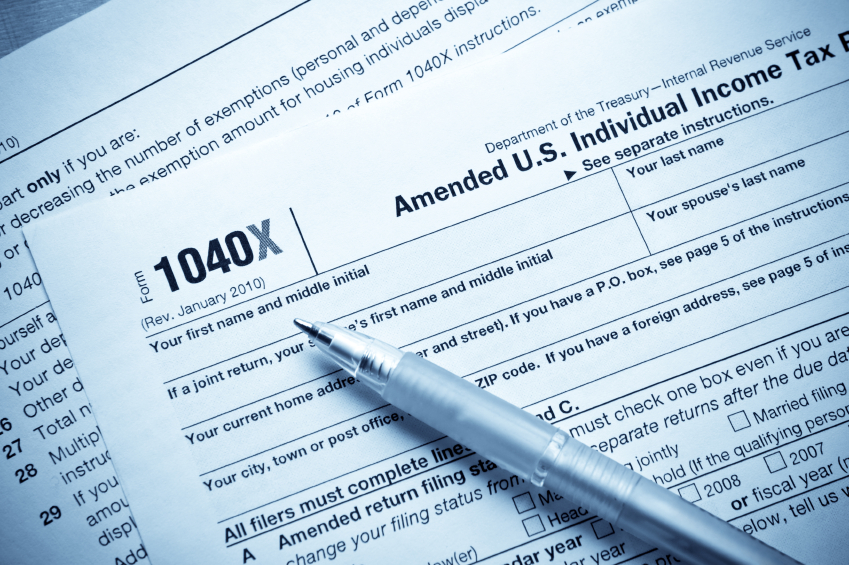
If you discover a mistake on your tax return after you’ve already filed it, don’t panic. In most cases, all you have to do is file an amended tax return.
Continue readingIn most cases, gains from sales are taxable. But did you know that if you sell your home, you may not have to pay taxes? Here are ten facts to remember if you sell your home this year.
Continue readingWhen choosing a payroll service provider to handle payroll and payroll tax, employers need to make sure they choose a trusted payroll service that can help them avoid missed deposits for employment taxes and other unpaid bills. Typically, these clients remain legally responsible for paying the taxes due, even if the employer sent funds to the payroll service provider for required deposits or payments.
Continue readingContributions to a Health Savings Account (HSA) are used to pay the account owner’s current or future medical expenses, their spouse, and any qualified dependent and are adjusted annually for inflation. For 2023, the annual inflation-adjusted contribution limit for a Health Savings Account (HSA) increases to $$3,850 for individuals with self-only coverage (up $200 from 2022) and $7,750 for family coverage (up $450 from 2022).
To take advantage of an HSA, individuals must be covered by a High Deductible Health Plan (HDHP) and not be covered by other health insurance with the exception of insurance for accidents, disability, dental care, vision care, or long-term care. Medical expenses such as deductibles, copayments, and other amounts (but excluding premiums) must not be reimbursable by insurance or other sources and do not qualify for the medical expense deduction on a federal income tax return.
For the calendar year 2023, a qualifying HDHP must have a deductible of at least $1,500 for self-only coverage or $3,000 for family coverage (up $100 and $200, respectively, from 2022) and must limit annual out-of-pocket expenses of the beneficiary to $7,500 for self-only coverage and $15,000 for family coverage, an increase of $450 and $900, respectively, from 2022. As with contribution limits, deductibles and out-of-pocket expenses are adjusted for inflation annually.
Please call if you have questions about Health Savings Accounts.
San Jose: (408) 252-1800
Watsonville: (831) 726-8500

When creating a budget, it’s essential to estimate your spending as realistically as possible. Here are five budget-related errors commonly made by small businesses and some tips for avoiding them.
Continue reading
With teen employment expected to be plentiful this summer, with better pay and more opportunities, chances are good that your high school or college student will have a job this summer. Here’s what they should know about summer jobs and taxes:
Continue reading
Many businesses hire part-time or full-time workers, especially in the summer. The IRS classifies these employees as seasonal workers, defined as an employee who performs labor or services on a seasonal basis (i.e., six months or less). Examples of this seasonal work include retail workers employed exclusively during the holidays, sports events, or during the harvest or commercial fishing season. Part-time and seasonal employees are subject to the same tax withholding rules that apply to other employees.
All taxpayers fill out a W-4 when starting a new job. Employers use this form to determine the amount of tax to be withheld from your paycheck. Taxpayers (including students) with multiple summer jobs will want to ensure all their employers withhold an adequate amount of taxes to cover their total income tax liability.
Continue reading

We are thrilled to welcome another WCPA baby this month! Senior accountant Frances Meng gave birth to her newborn son, Buyi, on May 29th.
Congratulations to Frances and her family!